
Summary Points
- Cost tracking accumulates data for forecasting and reporting to keep budgets in line with project expectations.
- Capital projects require sophisticated solutions that keep up with multiple departments and entities in multi-billion-dollar budgets.
- Compliance multiples complexity, requiring systems that can organize expenses and models along varying axes.
- Multi-entity consolidation ensures that all invested parties are able to communicate freely and operate using a unified platform.
Tackling Enterprise Project Accounting
As oil and gas enterprises expand operations, project complexity grows. Manageable capital initiatives can evolve into large-scale, multi-entity projects. Regulatory oversight, distributed teams, fluctuating market conditions, and growing financial risks all exacerbate inefficiencies in project accounting and job costing.
When spreadsheets and disconnected systems fall short, ERP tools offer scalable solutions with customizable applications for teams, departments, and entities. Acumatica Project Accounting provides a structured, scalable approach to project financial management.
Cost Tracking
Project accounting in oil and gas extends beyond simple expense tracking. Structured methodologies consider market dynamics, uncertainty, and risk while analyzing individual expenses and ROI per job.
A framework for oil and gas ERP job costing covers essential elements:
- Project Scope Definition. Deliverables, timelines, and resource requirements create a foundation for cost estimation and accountability.
- Cost Estimation and Updates. Real-time cost data keeps budgets aligned with real performance results.
- Contingencies and Allowances. Reserve funds tackle unforeseen events and obstacles alongside market shifts and technical challenges.
- Risk Analysis and Probabilistic Estimating. Monte Carlo simulations and other advanced analytics anticipate market volatility and enable proactive planning.
- Multi-Method Cross Validation. Validating across established methods improves accuracy and confidence in projections.
Acumatica Project Accounting software supports this framework by consolidating data and enabling dynamic updates.
Major Cost Drivers in Oil and Gas
Acumatica offers solutions for project accounting along major cost drivers in the oil and gas industry.
Compliance and Regulatory Requirements
A major cost driver, compliance requires careful attention at every stage of project management. Environmental standards, safety protocols, reporting regulations, and audit readiness all create direct and indirect expenses that require appropriate tracking and forecasting.
Geological Uncertainty and Project Complexity
Geological uncertainty increases risk and often requires specialized equipment and labor. Simultaneously, drilling conditions, reservoir characteristics, and other challenges extend timelines and raise costs.
Sufficient financial modeling in Acumatica Project Accounting anticipates many such costs and conditions, yielding more accurate forecasts and more effective job costing.
Market Trends and Inflation
Material, labor, and equipment costs all fluctuate and fall victim to general inflation.
Probabilistic estimating can account for these changes and sufficiently budget around them, keeping projects within cost projections.
A centralized job costing ERP monitors cost drivers in real time to adjust forecasts and meet expectations.
Capital Projects
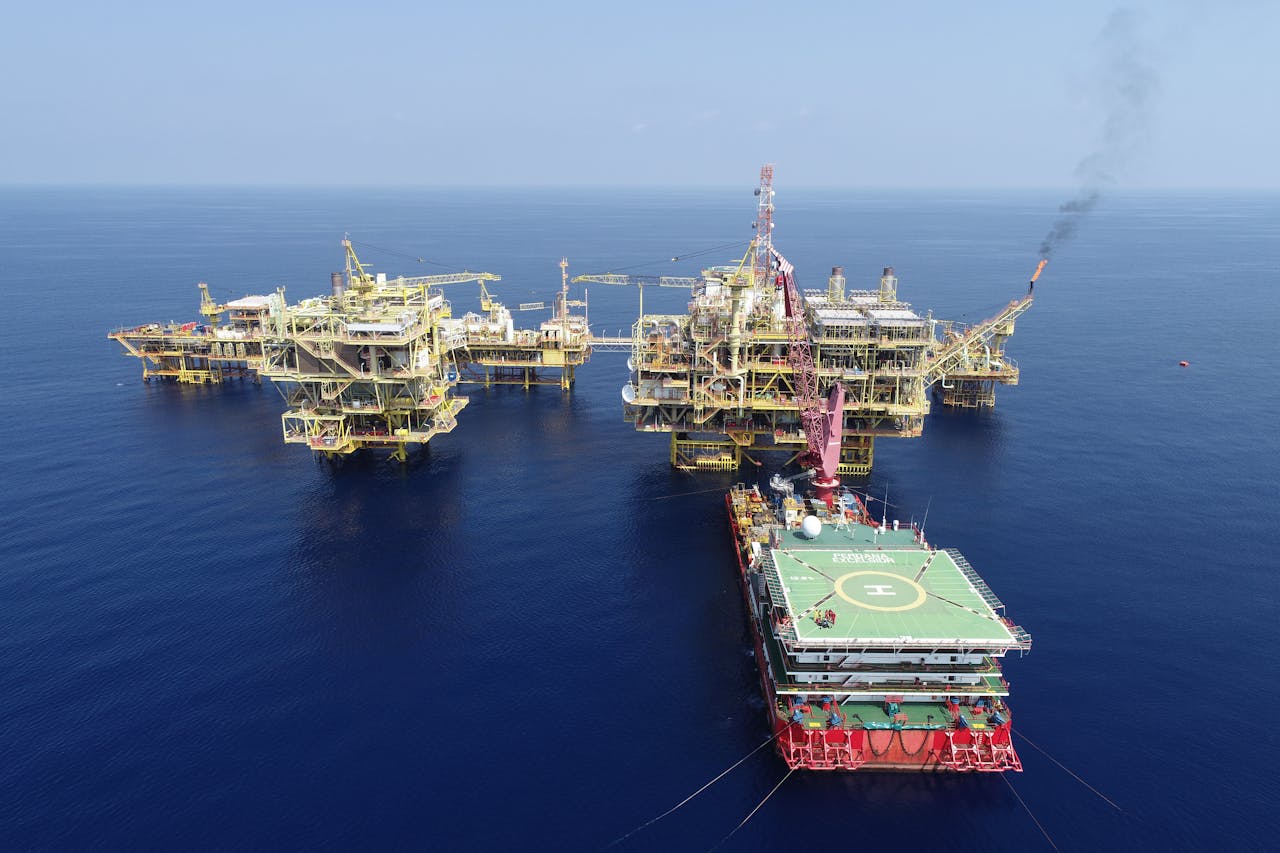
Capital projects in oil and gas offer unique complexity. Projects scale from millions to multiple billions of dollars. Teams are distributed across vast geographies. Shifting regulatory frameworks require constant and rapid adaptation, and every project comes with high levels of technical and operational risk.
Many tools fall short, lacking in cross-functional engineering alignment and real-time performance visibility.
Centralized systems, like Acumatica Project Accounting, enable enterprise organizations to identify cost overruns early, leading to corrective actions and consistent reporting across entities.
Compliance
In the United States, no fewer than nine federal agencies create regulations for oil and gas companies, not including state and local regulatory authorities. Compliance introduces vast complexities and constantly evolving frameworks that challenge the most capable teams.
Regulations tend to increase over time, exponentiating complexities associated with growth and scale, while compliance failures come with financial risks that start at seven figures and rise rapidly.
Staying up to Date
Automation in Acumatica Project Accounting tools increase compliance accuracy, tracking rule changes, and their immediate applications. AI assists engineers in determining efficient solutions, offloading but not eliminating analytical and decision burdens.
Compliance updates introduce further challenges, requiring adaptable, robust ERP job costing solutions
Organizing Compliance
Maintaining compliance across enterprise operations requires a holistic look at regulations and their impact on operations. Compliance efforts can be organized according to focus areas:
- Regulatory requirements
- Environmental obligations
- Operational safety
- Hazard mitigation
- Audit readiness
- Reporting requirements
- Employee training
- Governance structures
Multi-Entity Consolidation
Following significant investments, including mergers and acquisitions (M&A), multi-entity consolidation creates alignment in an expanding organization. Challenges in this area often include competing or incompatible ecosystems, leadership fragmentation, and continuity gaps across governance and consistency.
Solutions like Acumatica Project Accounting Software aid consolidation by standardizing ecosystems while enabling granular solutions for departments and project groups.
Expert Help With Acumatica
Project accounting and job costing in the oil and gas industry require specialized expertise. Design and support models determine how much value stems from ERP investments.
Etticus Solutions provides specialized help for organizations. We can evaluate, design, and deploy an ERP to help you with project accounting, job costing, and more.
With the right partner, Acumatica multiplies internal capabilities, fostering sustainable growth.
Frequently Asked Questions
How does a job costing ERP improve cost controls compared to other solutions?
An ERP can replace manual data entry for traditional spreadsheets. It offers a larger range of native features and third-party integration options compared to streamlined or simplified accounting software. These features reduce errors, accelerate timelines, and enable powerful analytics that better forecast difficult-to-predict cost contributors.
How does Acumatica Project Accounting help manage compliance-related costs?
Acumatica integrates compliance documentation, reporting, approvals, and financial components into a centralized system. Regulatory direct and indirect costs, alongside environmental obligations and safety processes all roll into the same tracking, monitoring, and predictive mechanisms. This aids in predicting compliance costs and increases visibility when costs fall outside of expectations.
Can Acumatica consolidate financials across entities and joint ventures?
Yes. Acumatica allows enterprises to manage subsidiaries and joint ventures in a single environment. By standardizing data and reporting in real time, governance consistency and reconciliation efforts become simplified.
What cost drivers does Acumatica Project Accounting monitor?
The system can monitor virtually any cost drivers and organize them according to customizable tags. Commonly tracked drivers include labor rates, material prices, equipment costs, compliance expenses, and market fluctuations.
How scalable is Acumatica for oil and gas operations?
Acumatica utilizes a cloud-based architecture with no hard ceiling on scale. It can grow alongside a business without the need for software refitting.
